Is the Art Aquarium Museum Ginza Worth Visiting?
The Art Aquarium Museum Ginza turns thousands of goldfish into living art, set inside glowing glass sculptures on the ninth floor of a Ginza department store. It is compact, about an hour, and asks nothing of you except that you slow down and look. Here is what a visit involves, what it costs, and how to fit it into a day in central Tokyo.
About This Experience
9th floor of Ginza Mitsukoshi, 4-6-16 Ginza, Chuo City
Ginza Station, with direct underground access to Mitsukoshi through the Ginza exits
Open daily, roughly 10:00 to 19:00, with last entry about an hour before closing
Around 2,500 yen at the door; the dated entry ticket below is $17
About one hour, which makes it easy to pair with shopping or dinner
Dimly lit throughout for the light displays; photography is allowed without flash
Check Live Availability & Prices
See current pricing and open dates for the Art Aquarium Museum Ginza entry ticket below.
Is the Art Aquarium Museum Ginza Worth It?
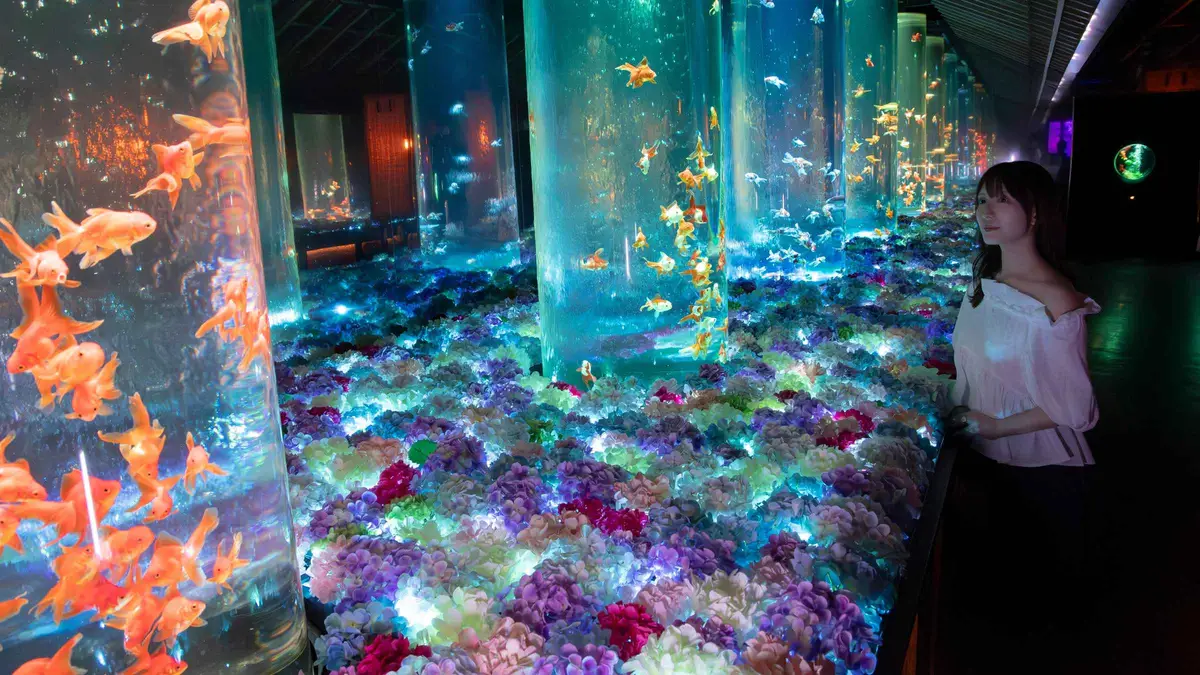
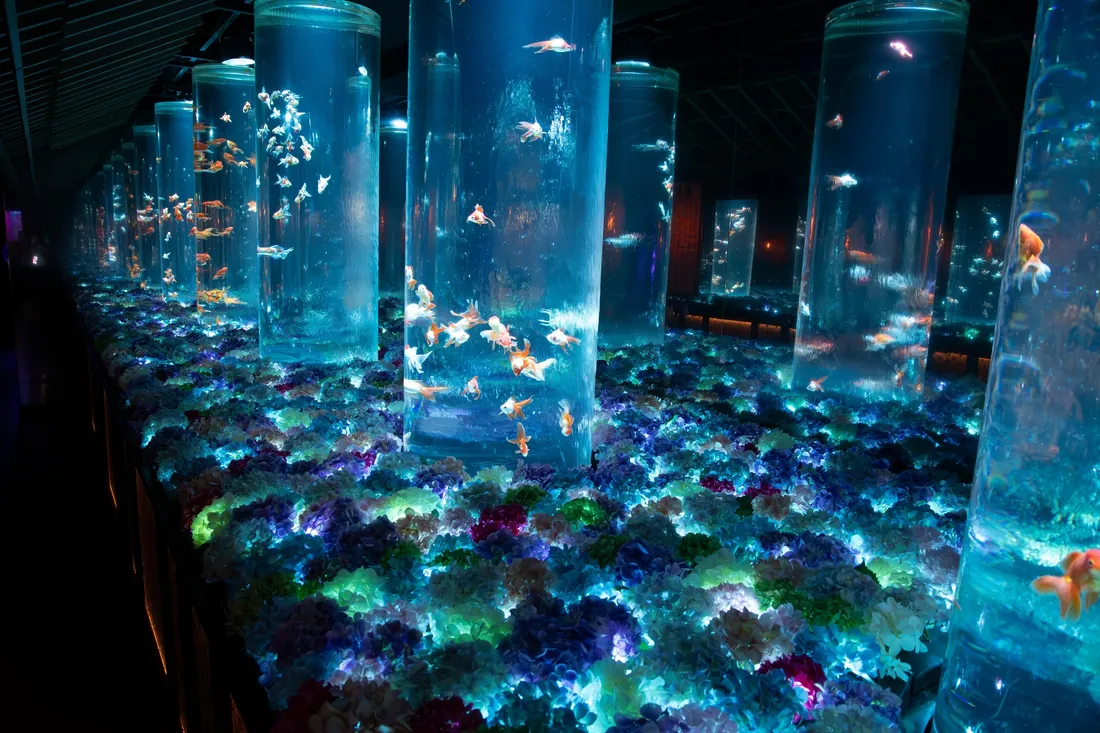
This is an art exhibition built around living goldfish, not a conventional aquarium, and knowing that going in matters. There are no sharks, no touch tanks, and no walk-through tunnels. Instead you move through darkened rooms where goldfish drift inside kaleidoscope tanks, paper-lantern tanks, and seasonal flower staging, all lit and scored so the fish read as brushstrokes in motion. It draws directly on the Edo-period fashion for keeping ornamental goldfish, updated with projection and sound.
The honest measure is time and price. A ticket runs around 2,500 yen at the door, and most people are through in about an hour. For that hour you get one of the more photogenic interiors in central Tokyo and a genuinely calming half-hour among the lantern tanks. If you want depth and scale, the big museums serve that better; if you want a short, beautiful, weatherproof stop in the middle of a Ginza afternoon, this earns its place. The 4.5 rating from more than 400 visitors reflects that split: people who arrive expecting a full aquarium leave lukewarm, while those who treat it as an art installation tend to love it.
It also solves a scheduling problem. Because it sits inside a department store and opens every day, it works on a Monday when the public museums close and on a rainy afternoon when outdoor plans fall apart. To see how it fits alongside the city's larger collections, use the side-by-side comparison of Tokyo's museums on our homepage.
What You'll See
The exhibition is a sequence of set pieces, each a different way of framing the same subject. Highlights to look for as you move through the dark:
- The kaleidoscope tanks, where mirrored walls multiply a handful of goldfish into a swirling crowd
- Cylindrical paper-lantern tanks lit from within, glowing like festival chochin
- The large central goldfish display that anchors the main room
- Seasonal staging, with cherry blossoms in spring and autumn colors later in the year
- Color washes that cycle slowly across the tanks, changing the mood room by room
- Reflections in the polished floors and walls that double every installation
- Quiet corners built for sitting and watching a single tank for a while
How a Visit Flows
-
Before you go
Book a dated entry ticket
Reserve your entry online to skip buying at the counter, especially on weekends and holidays when Ginza is busy.
-
Getting there
Ride to Ginza Station
Take any line to Ginza Station and follow the underground signs straight into Mitsukoshi, then ride up to the ninth floor.
-
On arrival
Let your eyes adjust
The rooms are deliberately dark. Pause at the entrance for a moment so the lit tanks come into full color.
-
Inside
Move slowly through the tanks
Work through the kaleidoscope and lantern displays without rushing; the installations reward standing still.
-
Before you leave
Pair it with Ginza
Come out into the department store for a coffee or an early dinner, or walk the Ginza streets a floor below.
Know Before You Go
Not suitable for
- Visitors expecting a large aquarium with big marine species; this is goldfish and light art
- Anyone hoping for a long visit, since most people are through in about an hour
- Those uncomfortable in dim, low-lit rooms for the duration
What to bring
- Your dated entry ticket on your phone
- A phone or camera for low-light photos, with flash turned off
- A little patience for the low lighting as your eyes adjust
Not allowed
- Flash photography, which disturbs the fish and the displays
- Tripods and other large photography gear in the crowded rooms
- Touching or tapping the tanks
Insider Tips
A few small choices make the visit smoother.
- Go on a weekday or at opening; the narrow rooms feel crowded at peak times
- Give your eyes a minute to adjust before you start photographing
- Turn your phone to night mode and switch off the flash for the best shots
- Treat it as an art stop of about an hour, not a half-day outing
- Pair it with Ginza shopping or dinner, since you are already inside Mitsukoshi
- Save it for a Monday or a rainy afternoon, when it is open and dry
Where You're Headed
Art Aquarium Museum Ginza FAQ
How long does a visit to the Art Aquarium Museum Ginza take?
Most visitors spend about an hour inside. It is a compact exhibition, which makes it easy to combine with shopping or a meal in Ginza.
How much are tickets?
Admission is around 2,500 yen at the door. The dated entry ticket in this guide is priced at $17 and lets you reserve your slot in advance.
Is the Art Aquarium Museum Ginza worth it?
If you approach it as an art installation built around goldfish rather than a full aquarium, yes. It is one of the more photogenic and calming short stops in central Tokyo, and its 4.5 rating from more than 400 visitors reflects that.
Is it good for children?
Younger children usually enjoy the glowing tanks, though the dark rooms and the slow, quiet pace suit calm visits more than energetic ones. There are no interactive or touch elements.
Can you take photos inside?
Yes, photography is allowed without flash. Night mode on a phone handles the low light well; tripods and large gear are not practical in the crowded rooms.
Is it open on Mondays?
Yes. Because it sits inside Ginza Mitsukoshi and opens daily, it is a reliable option on a Monday when many of Tokyo's public museums are closed.
What Visitors Say
Smaller than I expected but genuinely beautiful. The lantern tanks were mesmerizing and it was the perfect hour before dinner in Ginza.
We went in on a rainy afternoon and it was exactly the calm, photogenic break we needed. My photos came out incredible in night mode.
Lovely to look at, just know it is an art show with goldfish and not a real aquarium. Set your expectations and you will enjoy it.